
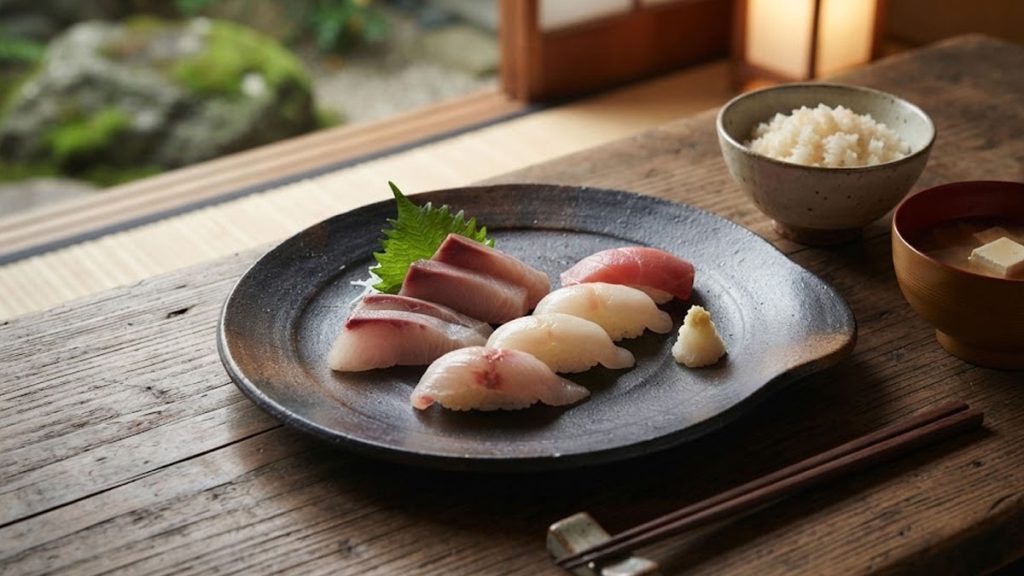
When a traditional multi-course kaiseki meal or a meticulously crafted plate of sushi is placed in front of you, it often resembles a living painting rather than simply food to eat. Every element—from the exact angle of a sashimi slice to the choice of ceramic bowl—feels deliberate, balanced, and aesthetically stunning.
In Japanese culture, the visual appeal of a dish is never an afterthought. It is an integral component of the dining experience, rooted in centuries of artistic philosophy, seasonal appreciation, and profound hospitality. Understanding this dedication to presentation reveals why eating in Japan engages all five senses long before the first bite.
Dining with the Eyes: Me de Taberu
A famous Japanese culinary philosophy states that me de taberu—which translates to “eating with your eyes.”
Before food is ever tasted, the brain processes its visual harmony, color palette, and arrangement. Japanese chefs believe that an ugly meal fails to engage the diner’s spirit, no matter how delicious it might be. By elevating food into visual art, the chef sets an intentional mood, signaling to the diner that care, respect, and artistry have gone into every morsel.
Honoring the Seasons: Shun and Aesthetics
One of the deepest drivers of Japanese food presentation is the celebration of shun—the fleeting peak moment when a specific ingredient is at its absolute best.
Plating is designed to reflect the natural world in real time. For example:
- Spring dishes might feature cherry blossom motifs, delicate pink accents, and airy porcelain plates that evoke renewal.
- Autumn meals frequently incorporate rustic earthenware, warm amber tones, and garnishes shaped like fallen maple leaves.
The plate acts as a canvas, and the food tells a story about the exact time of year, bridging the gap between nature and the dining table.
The Philosophy of Asymmetry and Negative Space
Unlike Western plating, which often favors symmetry, heavy centerpieces, or generous portions, traditional Japanese presentation embraces asymmetry and negative space.
Influenced by Zen principles like wabi-sabi (finding beauty in imperfection and transience), Japanese chefs intentionally leave vast areas of an exquisite ceramic or lacquer plate empty. This empty space is not a void; it creates visual breathing room, allowing each individual ingredient to stand out and command attention. An odd number of items—such as three or five pieces of sashimi—is almost always chosen because asymmetry feels more organic and alive than rigid balance.
The Vessel as Part of the Meal
In Japanese cuisine, the plate, bowl, or cup is never just a passive tool to hold food. The tableware is treated as an active partner to the dish.
Pottery and ceramics are chosen with immense care based on texture, weight, color, and temperature. A heavy, dark stoneware bowl might be selected to trap heat and provide a grounding visual weight for a winter stew, while a translucent, cool glass dish will be used to make summer noodles feel light and refreshing. The food and the vessel complete one another.
An Expression of Omotenashi
At its core, meticulous food presentation is an act of deep hospitality, known in Japan as omotenashi. It is a selfless dedication to anticipating the guest’s joy and comfort. When a chef spends extra minutes arranging micro-greens, carving daikon, or balancing colors on a plate, they are communicating a silent message to the diner: You are valued, and this moment is precious.
Feasting Beyond the Plate
Japanese food culture teaches us that a meal is an immersive sensory journey. By merging art, nature, philosophy, and flavor into a single presentation, every dish becomes a celebration of the present moment.